At the outbreak of World War II pigeon fanciers across the United Kingdom turned their birds over for use as message carriers. Throughout the war nearly a quarter of a million birds served for the Army, the RAF and the Police, Fire Service, Home Guard and civil defence units such as Bletchley Park; racing pigeons were taken from races, predatory birds were reduced along the coasts and strict controls were introduced on pigeon feed.
Homing pigeons were used not only in Western Europe but also on operations in Italy, Greece, North Africa, India and the Far East by British, American, Canadian and German forces. For example GI Joe returned to his loft at about 60 miles per hour during an operation where radio contact had been lost; his arrival led to the cancellation of a planned airstrike and saved many lives.
All RAF bomber and reconnaissance aircraft flew with arrangements that carried the birds in waterproof boxes; when a plane had to ditch at sea the pigeon would fly back to base to send coordinates and trigger a search-and-rescue operation. These missions were often carried out in extreme conditions — bad weather, enemy fire and long distances — and contributed to saving thousands of servicemen.
Birds taken from British lofts were assigned to the National Pigeon Service; Royal Blue, from the Royal Lofts, flew 120 miles from Holland on 10 October 1940 and within four hours ten minutes delivered a crew's report, providing the first message from a force-landed aircraft on the continent and was afterwards awarded the Dickin Madalyası. Pigeons carried messages in small capsules attached to their legs or in pouches strapped to their backs; at times pigeons were parachuted to resistance fighters, a procedure that was extremely dangerous both for the landing and for the local population. Permanent lofts and easily transportable mobile lofts were also established for the RAF and ground forces.
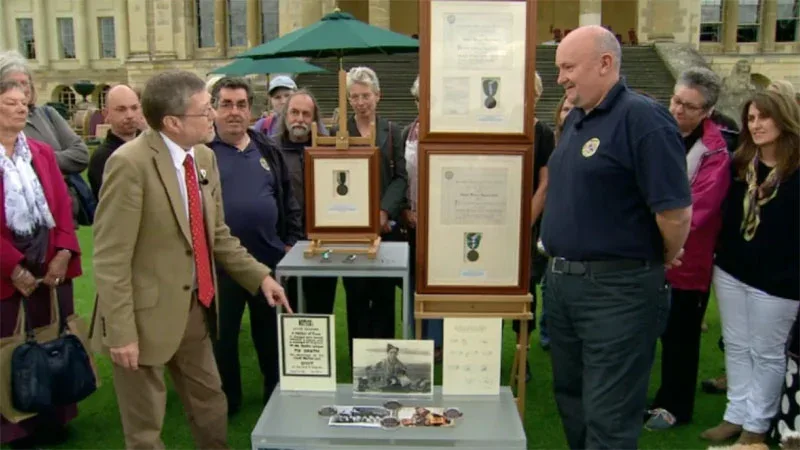
The Dickin Madalyası, awarded by the PDSA, was given for animal gallantry in World War II; of the 53 medals awarded during the war, 32 went to pigeons. Birds such as White Vision were recognised for their role in helping rescue captains and crews under severe conditions. War-era memorabilia are preserved in the RPRA archives; part of the association's collection was offered to Antiques Roadshow in 2013 for appraisal.