Data such as which pigeons were basketed, which pigeons returned and their return times are generated at each race; these form the basis for checks, rankings and championships. NPO emphasizes that in the digitalisation process not only the electronic timing system but also the subsequent processing of recorded race data is important.
Currently, different data streams arise through electronic detection/identification systems, clubs, sections and other parties involved in race processing. For this reason NPO sees it as critical that race data remain accessible independent of any system or supplier; this will ensure the continuity of the sport.
In the planned solution the necessary basketing and race data can be stored securely within NPO Cloud. Providers and service hosts will retain their roles; however the data required for organising and processing races will be kept accessible by NPO. This approach aims to increase continuity and make future interoperability of systems and services easier.
Making the data reliably available once will eliminate the need for repeated manual data collection or re-entry for different organisational needs. This both reduces duplicate work and lowers the risk of errors arising during data transfer.
NPO wants to prevent core data from being tied to a single system or a single supplier; this does not mean that all work will be carried out by NPO. Providers and service suppliers will continue to fulfil their duties as long as they meet the necessary conditions; but the continuity of the sport will be designed so it is not dependent on a single party.
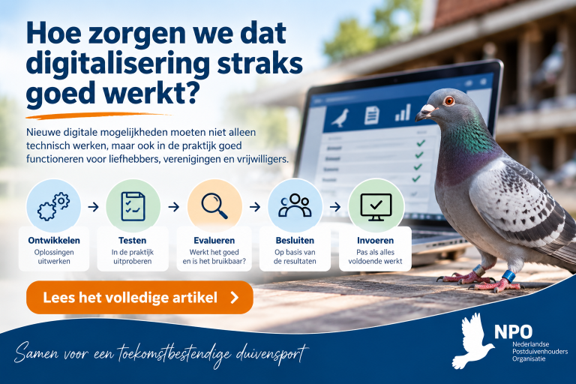
Centralised data access does not mean unlimited access for everyone; security and privacy will be priorities. Authorisation rules and regulations about who may use the data and for what purposes will be defined. The Digitalisation Committee has prepared the initial principles and roadmap, and NPO Management has approved proceeding in this direction; work continues on technical and financial details and on regulations for security, storage, exchange and authorisation. New applications will be developed, tested, evaluated and implemented in stages.